Our Legumes

What are legumes?

Legumes (pulses in English) are edible dry seeds from plants of the legume family, harvested mainly for human and animal consumption. Plants harvested green (such as fresh peas or green beans) are not considered dry legumes, nor are those primarily grown for oil (such as soybeans or peanuts), although from a nutritional standpoint they are also used as foods in some countries. Scientific classifications include more species, but these are the most widely consumed worldwide as dry legumes.
Las categorías científicas incluyen más especies, pero estas son las más consumidas mundialmente como legumbres secas.
Types of Legumes

01.

Beans (Phaseolus spp.)

Includes multiple varieties (black, red, pinto, and white beans). Widely consumed globally as a source of protein.

02.

Lentils (Lens culinaris)

Small, flat grains. Commonly used in soups, stews, and purées.

03.

Chickpeas

Round seeds, typical of Mediterranean and Indian cuisine.

04.

Cowpea / Black-eyed pea

Popular in Africa and some parts of the Americas. Used in stews, salads, and traditional dishes.

05.

Dry peas

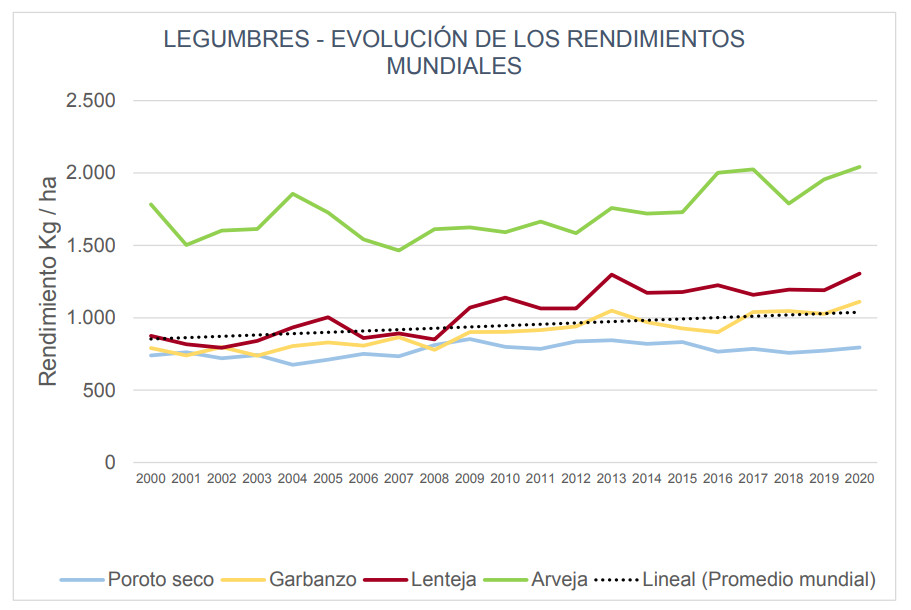
Intended for human and animal consumption, marketed whole or split. They are used in soups, stews, and purées, as well as a protein and energy input in animal feed rations. Rich in protein and fiber, they also provide benefits to crop rotations due to their ability to fix nitrogen. Russia leads global production of dry peas, followed by Canada, China, and India among the highest global producers.

Legumes can be classified by species and culinary use. Among the most important are:

Legumes are consumed in many ways around the world:

Overview

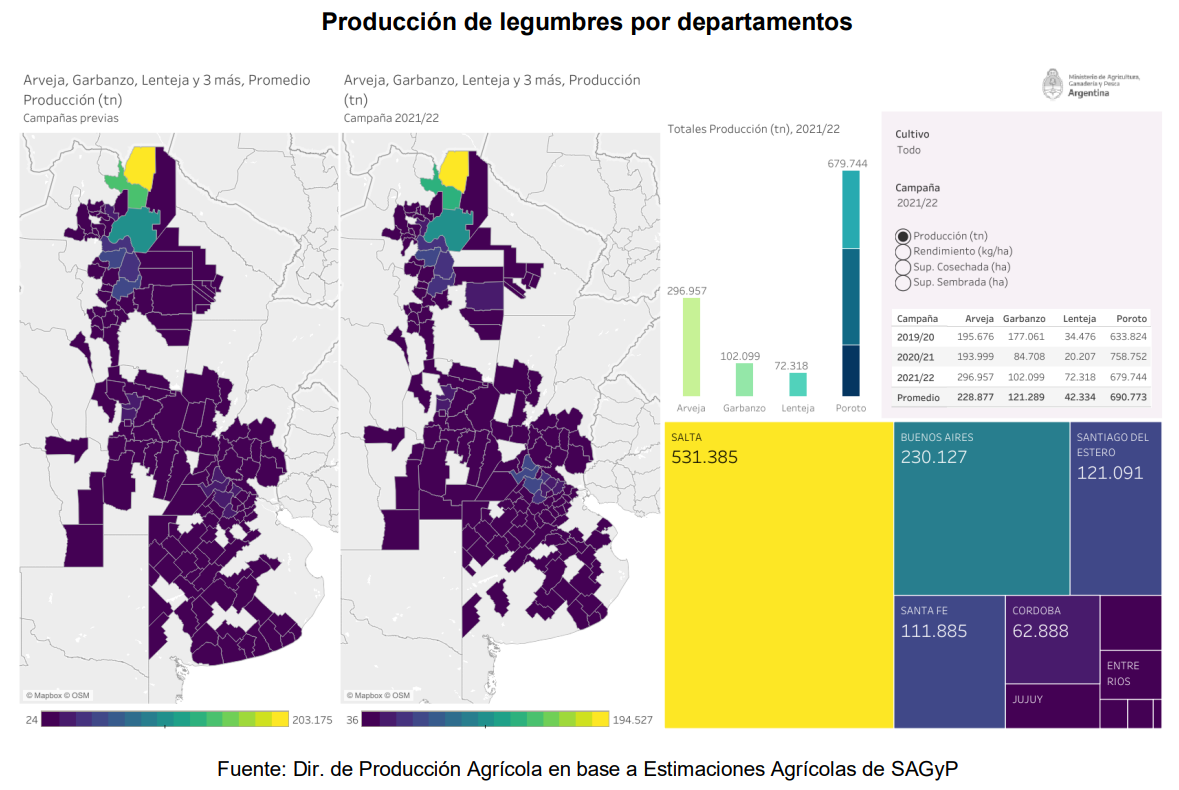
Argentina mainly cultivates beans (dry beans), peas, chickpeas, and lentils. Production is concentrated in two macro-regions:
Northwest Argentina (NOA) — especially Salta, Jujuy, and Tucumán (strong presence of beans and chickpeas).
Central–northern Pampas region / agricultural core — Córdoba, Santa Fe, Entre Ríos, Santiago del Estero, and Buenos Aires (important for lentils, peas, and beans).
The legume sector is highly export-oriented: most of the harvest is destined for international markets, while domestic consumption remains relatively low.

Main regions: Salta and Jujuy (NOA) are the most relevant hubs; it is also grown in central-northern provinces (Córdoba, Santa Fe) and in some areas of Buenos Aires.
Cycle/season: summer crop (late sowing in warmer NOA areas), with autumn–winter harvests depending on the region.
Volume/economic role: It is the main crop within the complex (representing the largest share of volume and legume exports from Argentina). Argentina has strong export niches (black beans, white beans) to markets such as Mexico, Spain, and Brazil.
Importance: Generates foreign currency through exports and supports regional economies in the NOA; its recent growth explains a large part of the expansion of legume acreage in the country.

Main regions: Córdoba, Santa Fe, Buenos Aires (central-northern area and Pampas region). There is also production in cooler/temperate provinces.
Cycle/season: winter crop (autumn sowing).
Productive role: represents a significant share of total volume (second in participation after beans in recent seasons).
Importance: export-oriented (with markets in the Americas and Europe) and valuable in crop rotations due to its nitrogen-fixing capacity.

Main regions: NOA (Salta, Jujuy, Tucumán) and areas of the northern central region; production is also notable in some areas of Córdoba.

Cycle/season: winter (sown in autumn under rainfed conditions or with moderate irrigation).

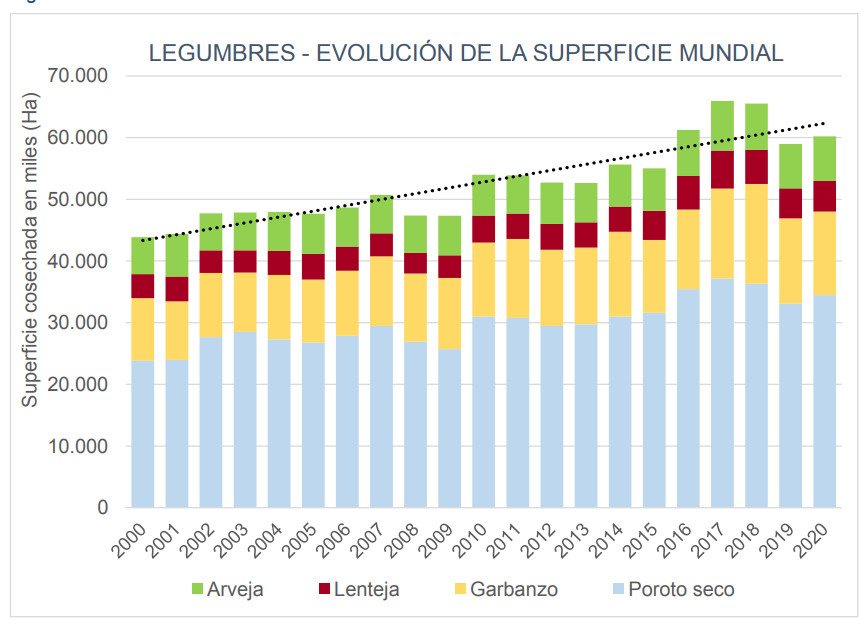
Trends: has shown strong growth in planted area over the last decade (with hectares multiplying in some hubs), although with high climate-related variability.

Importance: attractive export market (Pakistan, Turkey, EU); provides income alternatives and diversification for regional areas.

Main regions: northern Córdoba, Santa Fe, Buenos Aires (north/central areas), as well as temperate regions of the country’s central area.

Cycle/season: winter (autumn sowing).

Share: lower volume compared to beans and peas (smaller share of total tonnage), but with growth in planted area in recent seasons.

Importance: a strategic crop due to its protein contribution and its role in crop rotation; although production is smaller, it has international demand and potential for value addition.

Regions: production is concentrated in traditional areas (some zones of the Pampas region and NEA/NOA).

Importance: represent low volumes, but provide production diversity and niche market and industrialization opportunities.

Main producing regions
at the international level

According to FAO data and agricultural market projections:

Importance:

Legumes are essential for:

Scan the code